
Nike Air 720 — Hovercraft
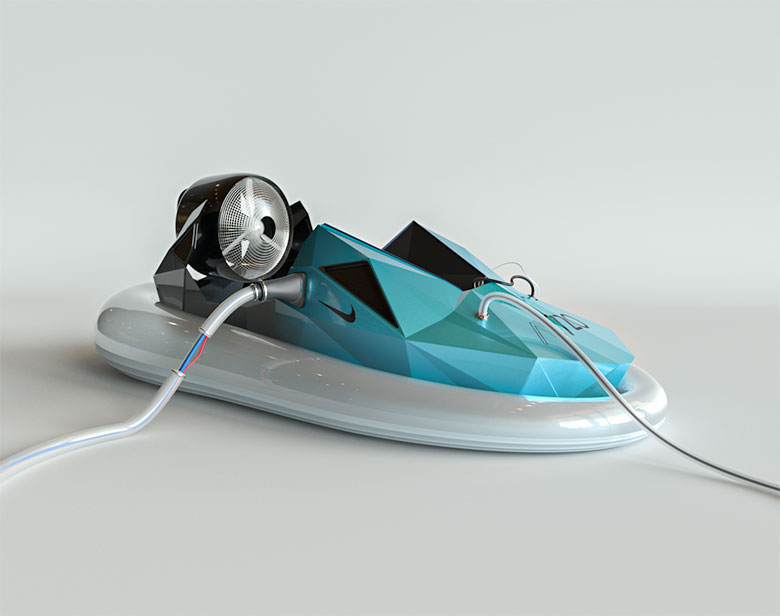
Translate the visual language of an air-cushioned sole into a physical object that could be photographed, filmed and shipped — without it reading as a prop.
A hovercraft. Not as illustration, but as a genuinely constructed object: faceted, engineered, sitting on a visible cushion of air. The product idea made literal, at full scale.
Built in 3D first, because the facets had to be resolvable in the real world — panel sizes, joins, material behaviour, weight. The CGI was not a visualisation of the build; it was the build.
Generative exploration would compress the front end of this project — dozens of silhouette and material directions before anything is modelled. But the moment a thing has to be manufactured, generated imagery stops being useful and CAD-accurate 3D takes over. Knowing exactly where that line sits is the job.
Look development and material studies in 3D, then fabrication drawings, on-set supervision and postproduction that reconciled the rendered and the photographed versions into one consistent set of assets.
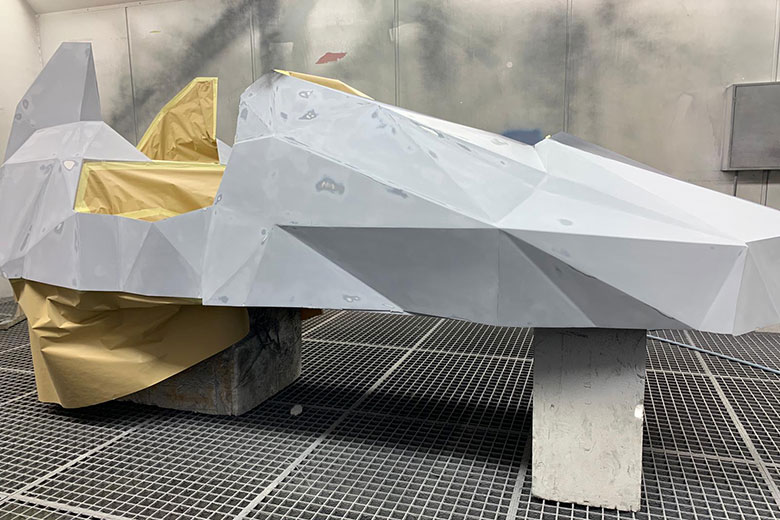
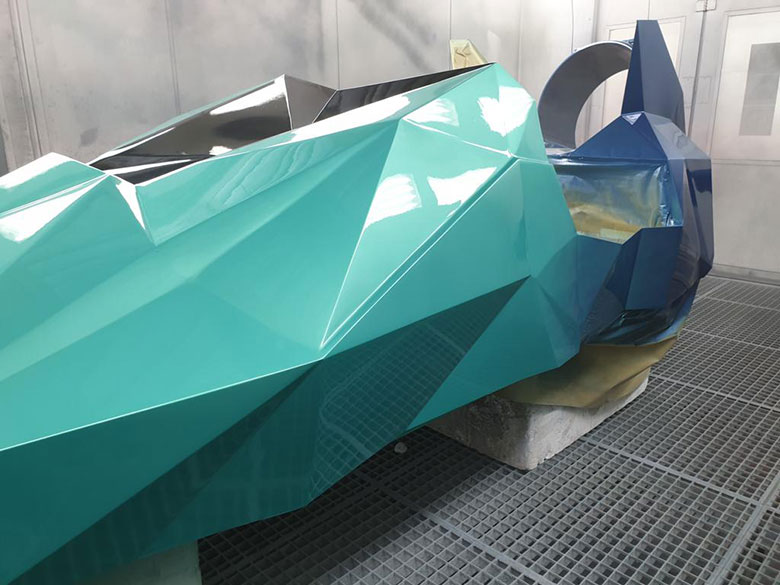
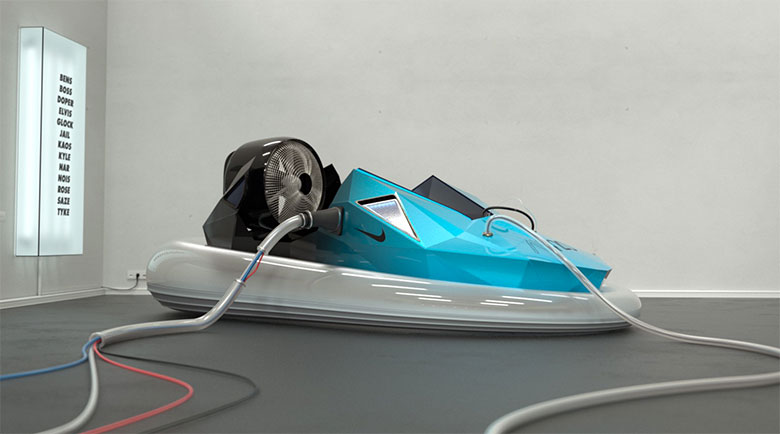
BUILD → FINAL
Drag to compare. The gap between the two is where the work actually happens.
What the approach changed.
Model to object
One geometry served concept, fabrication and final imagery.
Fewer surprises
Material and scale problems resolved in 3D, not on the build floor.
Reusable asset
The digital object continued to produce imagery after the build wrapped.
Have a project in mind?
Campaign, AI experiment, CGI production — or simply a question about what AI could realistically make possible for your brand.
- Email info@neilriot.com
- LinkedIn Connect