
Paulson 3-Phase Protective System
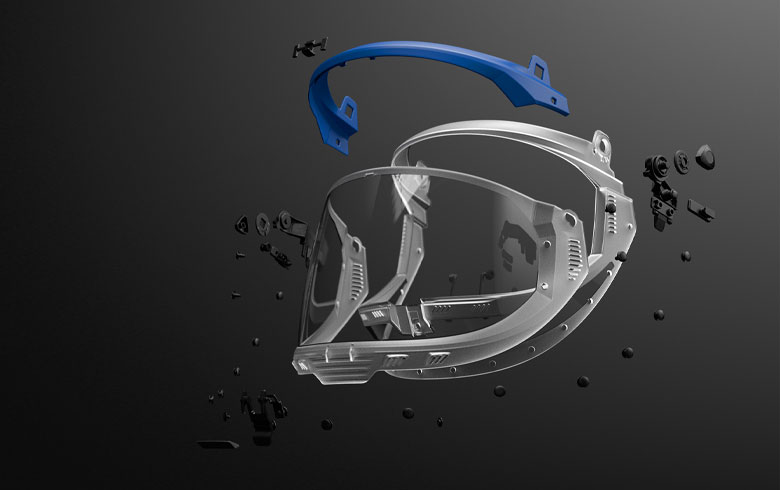
A safety product is bought on trust in its engineering. Photography shows what it looks like. It does not show how it is constructed, and construction was the entire argument.
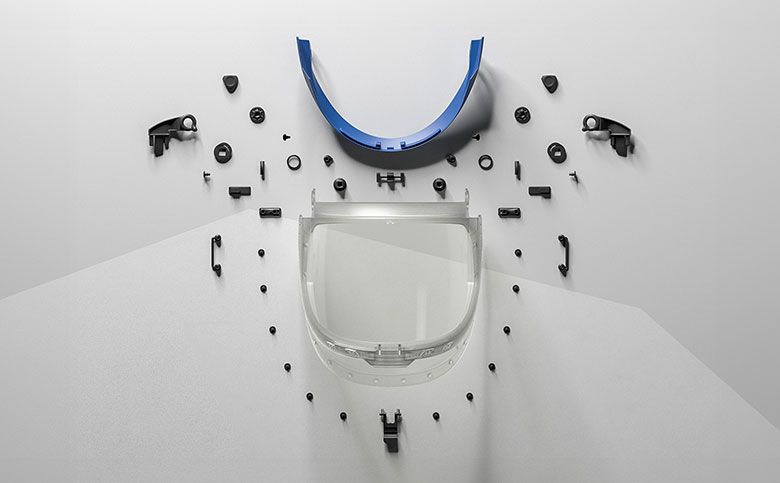
Take the product apart and keep it in the air. Every component visible, every relationship legible — one visual system running from technical line drawing to finished hero render.
Full CGI. Component-accurate geometry meant the same model could produce the exploded view, the wireframe, the catalogue silhouettes and the hero image, with no discrepancy between them.
This is the clearest case for not using generative AI on the product itself. A safety component rendered approximately is worse than useless. What AI does earn its place on: environments, lighting moods, campaign context and layout exploration around a CGI product that stays exact.
Material and lighting development for reflective and transparent parts, line-art extraction from the same geometry, and a catalogue-wide colour and shadow system so 200 pages felt shot in one session.
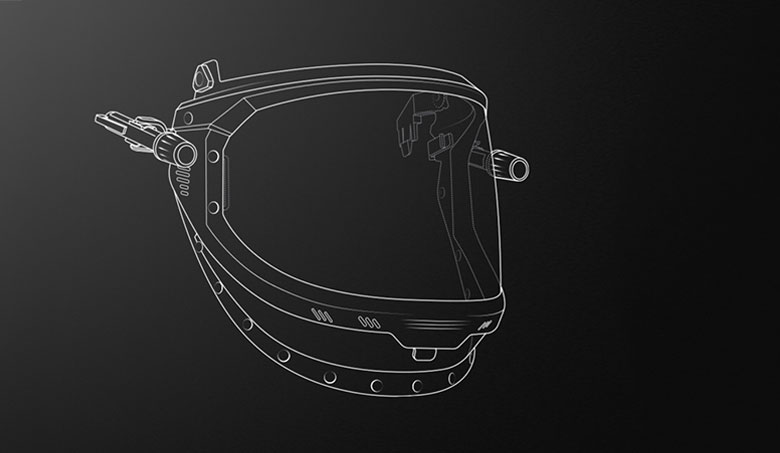
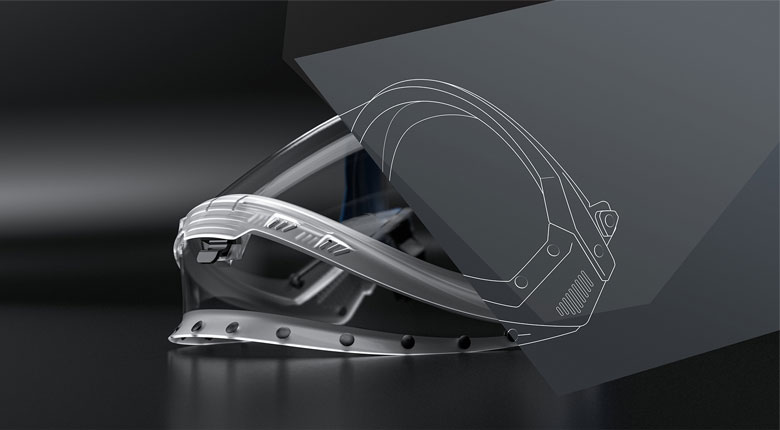
WIREFRAME → FINAL
Drag to compare. The gap between the two is where the work actually happens.
What the approach changed.
One source geometry
Exploded views, line art and hero renders from a single model.
No reshoots
Product revisions re-rendered instead of re-photographed.
Consistent catalogue
One lighting and material system across the full range.
Have a project in mind?
Campaign, AI experiment, CGI production — or simply a question about what AI could realistically make possible for your brand.
- Email info@neilriot.com
- LinkedIn Connect